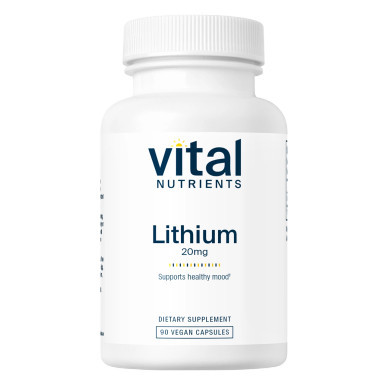
Lithium (Orotate) 1 mg by Pure Encapsulations – Support for Emotional Wellness, Mood, and Cognitive Balance
Lithium (Orotate) 1 mg by Pure Encapsulations is a specialized formula designed to support emotional wellness, mood balance, and cognitive function. This gentle and bioavailable form of lithium helps promote neurotransmitter activity and stabilize behavioral and emotional responses, making it a safe and effective choice for long-term mental well-being. Pure Encapsulations’ lithium orotate supplements are crafted to deliver consistent, low-dose support for mood and cognitive health with minimal side effects.
Key Lithium (Orotate) 1 mg Benefits
- Promotes healthy mood and emotional balance
- Supports cognitive clarity and mental focus
- Encourages healthy behavioral responses and stress resilience
- Aids neurotransmitter function for overall brain health
How Lithium (Orotate) 1 mg Works
Lithium (as lithium orotate) delivers a trace mineral that naturally supports healthy neurotransmitter activity and intracellular signaling. By helping to regulate mood-related pathways, it encourages calmness, clarity, and emotional stability. Pure Encapsulations uses a low-dose, highly bioavailable form of lithium that:
- Supports balanced serotonin and dopamine activity
- Helps maintain optimal neuronal communication
- Minimizes common side effects associated with higher-dose lithium supplements
Lithium (Orotate) 1 mg Is Formulated For
- Individuals seeking to support emotional wellness, cognitive function, and mood balance
- Those looking for a safe, low-dose lithium supplement for ongoing brain and emotional health
- People interested in nutritional support for behavior and stress management
Supplements support your health but do not replace a balanced diet. Always check with your healthcare practitioner if you have doubts about a new supplement. Or you may book a FREE product consultation with Holistic Health Partners. You may also want to look at other Brain support products.
Recommendation:
Pure Encapsulations suggests taking 1 capsule daily, with a meal, or as directed by a health professional.
Serving Size: 1 capsule
Servings Per Container: 90
Amount Per Serving:
Lithium (as lithium orotate) 1 mg
Other Ingredients: Hypoallergenic plant fiber (cellulose), vegetarian capsule (cellulose, water)
Free from allergens, artificial additives, and GMOs
Caution: Not to be taken by pregnant or lactating women. Consult your health professional before use. Do not take in conjunction with antidepressants unless advised by a health professional. Individuals with bipolar disorder or depression must be closely monitored. Regular monitoring of lithium levels and kidney function is recommended. Do not exceed the recommended dose.
Storage: Store in a cool, dry place.
These statements have not been evaluated by the FDA. This product is not intended to diagnose, treat, cure, or prevent any disease.
Pure Encapsulations logo, text, graphics, and photo images are the property of Société des Produits Nestlé S.A. and are used with permission. Copyright © 2021.
Click here to view Product Info Sheet
References:
- Beaulieu, J. M., Zhang, X., Rodriguiz, R. M., Sotnikova, T. D., Cools, M. J., Wetsel, W. C., & Caron, M. G. (2004). Role of GSK3 beta in behavioral abnormalities induced by serotonin deficiency. Proceedings of the National Academy of Sciences, 101(14), 5099-5104. https://doi.org/10.1073/pnas.0306667101
- Forlenza, O. V., Diniz, B. S., Radanovic, M., Santos, F. S., Talib, L. L., & Gattaz, W. F. (2011). Disease-modifying properties of long-term lithium treatment for amnestic mild cognitive impairment: Randomized controlled trial. British Journal of Psychiatry, 198(5), 351-356. https://doi.org/10.1192/bjp.bp.110.080044
- Leyhe, T., Stransky, E., Eschweiler, G. W., & Buchkremer, G. (2009). Increase of BDNF serum concentration in lithium treated patients with early Alzheimer’s disease. Journal of Alzheimer's Disease, 16(3), 649-656. https://doi.org/10.3233/JAD-2009-0979
- Nunes, M. A., Viel, T. A., & Buck, H. S. (2013). Microdose lithium treatment stabilized cognitive impairment in patients with Alzheimer's disease. Current Alzheimer Research, 10(1), 104-107. https://doi.org/10.2174/156720501131001011
- Schrauzer, G. N., & Shrestha, K. P. (1994). Lithium in drinking water and the incidences of crimes, suicides, and arrests related to drug addictions. Biological Trace Element Research, 40(1), 89-101. https://doi.org/10.1007/BF02917573
- Shao, L., Young, L. T., & Wang, J. F. (2008). Chronic treatment with mood stabilizers lithium and valproate prevents excitotoxicity by inhibiting oxidative stress in rat cerebral cortical cells. Neuroscience, 151(2), 518-524. https://doi.org/10.1016/j.neuroscience.2007.10.026
- Straten, G., Scapozza, L., Oertli, K., & Taschner, G. (2011). Acetylcholinesterase inhibitors and psychotropic drugs in the treatment of Alzheimer's disease: Effects on behavioral disturbances. Current Alzheimer Research, 8(8), 853-859. https://doi.org/10.2174/156720511798192915
- Szklarska, D., & Rzymski, P. (2019). Is lithium a micronutrient? From biological activity and epidemiological observation to food fortification. Biological Trace Element Research, 189(1), 18-27. https://doi.org/10.1007/s12011-018-1612-x