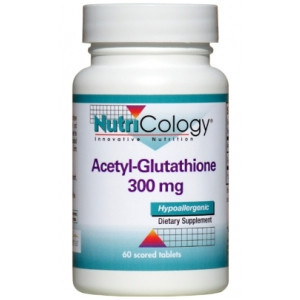
S-Acetyl Glutathione™ by Xymogen – Advanced Glutathione Supplement for Cellular Detox & Antioxidant Support
S-Acetyl Glutathione™ by Xymogen is a highly bioavailable glutathione supplement designed to support the body’s natural detoxification support, antioxidant defenses, and overall cellular health. Featuring a stabilized, acetylated form of glutathione, this formula helps protect and replenish intracellular glutathione levels more effectively than standard forms.
Key S-Acetyl Glutathione™ Benefits
- Supports healthy detoxification pathways and liver function
- Provides powerful antioxidant support against oxidative stress
- Promotes optimal immune system support
- Helps maintain healthy cellular health and aging processes
- Designed for enhanced stability and absorption compared to conventional glutathione
How S-Acetyl Glutathione™ Works
S-Acetyl Glutathione™ delivers a modified form of glutathione that is resistant to breakdown in the digestive tract, allowing it to reach cells intact.
- S-Acetyl Glutathione: An acetylated form of glutathione that readily crosses cell membranes. Supports intracellular glutathione levels critical for antioxidant defense and helps to neutralize free radicals and support phase I and II detoxification.
This formula is well tolerated, non-habit forming, and designed for long-term use under professional guidance.
S-Acetyl Glutathione™ Is Formulated For
- Individuals seeking advanced detoxification support
- Those exposed to environmental or oxidative stress
- Adults looking to support immune system support and longevity
- People wanting a more bioavailable glutathione supplement
- Patients following practitioner-guided wellness or detox protocols
Supplements support your health but do not replace a balanced diet. Always check with your healthcare practitioner if you have doubts about a new supplement. Or you may book a FREE product consultation with Holistic Health Partners. You may want to look at our other Anti-Oxidant and Detox support products.
Recommendation: Xymogen suggests taking one to two capsules 1 to 2 times a day, or as recommended by your healthcare professional.
Serving Size: 2 capsules
Servings Per Container: 30 or 60
S-Acetyl Glutathione 200 mg
Other Ingredients: Acid-resistant capsule (hypromellose, gellan gum, and water), microcrystalline cellulose, stearic acid, magnesium stearate, and silica.
Does Not Contain: Wheat, gluten, corn, yeast, soy, animal and dairy products, fish, shellfish, peanuts, tree nuts, egg, sesame, GMOs, artificial colors, artificial sweeteners, or artificial preservatives.
Caution: Consult your healthcare professional prior to use. Individuals taking medication should discuss potential interactions with their healthcare professional. Do not use if tamper seal is damaged.
Storage: Keep closed in a cool, dry place out of reach of children.
These statements have not been evaluated by the FDA. This product is not intended to diagnose, treat, cure, or prevent any disease.
LEGAL NOTICE: Xymogen's Exclusive Professional Formulas are available through select licensed health care professionals. The Internet Sale and Discounting of XYMOGEN formulas are strictly prohibited. covenanthealthproducts.com makes XYMOGEN formulas available only to patients of our clinic. If you are a patient of covenanthealthproducts.com, you may inquire about XYMOGEN by calling (800) 627-6518
References:
- Locigno, R., Pincemail, J., Henno, A., et al. (2002). S-Acetyl-glutathione selectively induces apoptosis in human lymphoma cells through a GSH-independent mechanism. International Journal of Oncology, 20(1), 69–75. https://doi.org/10.3892/ijo.20.1.69
- Lomaestro, B. M., & Malone, M. (1995). Glutathione in health and disease: Pharmacotherapeutic issues. Annals of Pharmacotherapy, 29(12), 1263–1273. https://doi.org/10.1177/106002809502901205
- Cacciatore, I., Cornacchia, C., Pinnen, F., et al. (2010). Prodrug approach for increasing cellular glutathione levels. Molecules, 15(3), 1242–1264. https://doi.org/10.3390/molecules15031242
- Vogel, J., Cinatl, J., Dauletbaev, N., et al. (2005). Effects of S-acetylglutathione in cell and animal models of herpes simplex virus type 1 infection. Medical Microbiology and Immunology, 194(1–2), 55–59. https://doi.org/10.1007/s00430-003-0215-2
- Ballatori, N., Krance, S. M., Notenboom, S., et al. (2009). Glutathione dysregulation and the etiology and progression of human diseases. Biological Chemistry, 390(3), 191–214. https://doi.org/10.1515/BC.2009.033
- Richman, P. G., & Meister, A. (1975). Regulation of gamma-glutamyl-cysteine synthetase by nonallosteric feedback inhibition by glutathione. Journal of Biological Chemistry, 250(4), 1422–1426. https://doi.org/10.1016/S0021-9258(19)41799-5
- Anderson, M. E., Powrie, F., Puri, R. N., et al. (1985). Glutathione monoethyl ester: Preparation, uptake by tissues, and conversion to glutathione. Archives of Biochemistry and Biophysics, 239(2), 538–548. https://doi.org/10.1016/0003-9861(85)90289-6
- Anderson, M. E., Nilsson, M., & Sims, N. R. (2004). Glutathione monoethyl ester prevents mitochondrial glutathione depletion during focal cerebral ischemia. Neurochemistry International, 44(3), 153–159. https://doi.org/10.1016/j.neuint.2003.08.002
- Kretzschmar, M. (1996). Regulation of hepatic glutathione metabolism and its role in hepatotoxicity. Experimental and Toxicologic Pathology, 48(5), 439–446. https://doi.org/10.1016/S0940-2993(96)80073-6
- Fraternale, A., Paoletti, M. F., Casabianca, A., et al. (2006). Antiviral and immunomodulatory properties of new pro-glutathione (GSH) molecules. Current Medicinal Chemistry, 13(15), 1749–1755. https://doi.org/10.2174/092986706777935185
- Kretzschmar, M., & Klinger, W. (1990). The hepatic glutathione system—influences of xenobiotics. Experimental Pathology, 38(3), 145–164. https://doi.org/10.1016/S0940-2993(11)80031-3
- Donnerstag, B., Ohlenschlager, G., Cinatl, J., et al. (1996). Reduced glutathione and S-acetylglutathione as selective apoptosis-inducing agents in cancer therapy. Cancer Letters, 110(1–2), 63–70. https://doi.org/10.1016/S0304-3835(96)04474-9